


YouTube has become one of the most powerful platforms for businesses and B2B brands looking to showcase their expertise, build authority, and rank high in search results through video marketing and YouTube SEO. With billions of users consuming video content daily, YouTube offers a massive opportunity to attract new audiences and generate high-quality leads.
Despite its potential, many brands still hesitate to invest in YouTube marketing. Studies show that nearly 43% of companies struggle with consistently producing engaging video content, while others lack a clear YouTube content strategy or effective ways to measure the performance of their video marketing campaigns.
If your business plans to invest in YouTube marketing and video content creation, it’s important to approach it strategically. In this guide, we’ll explore three essential steps to building a successful YouTube marketing strategy, along with real examples from brands that are using YouTube to grow their visibility, engage audiences, and drive business results. But first, let’s understand the basics.
YouTube Marketing Explained: Why Brands Should Care
YouTube has become an essential platform for marketers for two main reasons. First, the rapid growth of YouTube influencers, content creators, and digital asset management (DAM) tools has made producing high-quality video content much easier than before. Second, audiences today prefer consuming video content, making platforms like YouTube a powerful channel for communication and marketing.
YouTube marketing is a form of video marketing strategy used by brands, marketers, and influencers to promote their products or services to their subscribers and a wider audience through the YouTube platform. This is achieved by creating engaging videos, running ads, and gaining visibility through YouTube search results and recommendations.
But why should your brand focus on YouTube marketing?
- First, YouTube’s powerful ecosystem with over two billion monthly active logged-in users offers massive exposure. The traffic generated through the platform can also contribute significantly to improving your SEO and online visibility.
- In addition, YouTube helps strengthen your brand presence by enabling continuous interaction with your audience. Businesses can use videos to share their brand story, demonstrate expertise, and provide solutions to their customers’ problems.
- Finally, YouTube offers brands and marketers an effective way to monetize their audience, creating new revenue opportunities and improving overall business growth.
How to Develop a YouTube Marketing Strategy
To build an effective YouTube marketing strategy, businesses need to do more than simply record and upload random daily content. A successful approach requires careful planning — from deciding what type of content to produce, to determining how it will be promoted and how its performance will be measured. For many marketers, managing all these elements can be challenging. Below are practical ways to develop a YouTube marketing plan that can guide your content and campaigns throughout the year
Understand the YouTube Ecosystem
Naturally, the first step is to define a clear marketing goal. At the same time, your customer profiles or buyer personas should already be prepared. These two elements act as the foundation of any effective social media marketing strategy.
However, it’s equally important to ensure that YouTube understands your content and recognizes why it is relevant to a particular audience or niche.
YouTube’s algorithm favors content that keeps viewers interested and engaged. Whenever someone searches for a topic, the platform recommends a collection of well-optimized and relevant videos directly on the user’s homepage.
Understanding the YouTube ecosystem typically involves optimizing several key elements, including:
- Using relevant keywords
- Naming your video file properly
- Writing a detailed video description
- Adding tags
- Including cards and end screens
- Selecting the right category
- Adding subtitles or captions
- Designing an engaging thumbnail
- Running YouTube ads
You might wonder why these steps are important. The reason is that YouTube functions not only as a social media platform but also as a powerful search engine. Because of this, marketers must optimize their videos so they can be discovered on both YouTube and Google search results. Since the two platforms are closely connected, understanding how the YouTube ecosystem works can significantly improve your SEO performance and video visibility.
Adopt an Omnichannel Approach for Your Distribution Strategy
On most social media platforms, your content distribution strategy often depends mainly on the platform itself, since that’s where the majority of users spend their time. However, YouTube marketing works a little differently. To maximize reach, you need to identify where your audience spends time when they are not actively browsing YouTube.
In other words, businesses should explore additional channels to promote their YouTube videos rather than relying entirely on YouTube’s internal system.
For example, consider SMM Organic. The platform provides various video tutorials and marketing insights through its blog and YouTube channel, including educational videos and practical guides related to social media marketing and YouTube growth. These videos can then be shared across different social media platforms, while links to the videos are also included in email marketing campaigns to reach potential subscribers and expand audience engagement.

Create a Standard Operating Procedure for Video Production
As mentioned earlier, consistently producing video content is often the most time-consuming part of the entire content production process. In many cases, this workflow is also shaped by a brand’s overall marketing operations and content strategy.
To maintain efficiency, an effective video production system should follow a clear Standard Operating Procedure (SOP). Establishing a structured process helps ensure consistency in how videos are created, edited, and published across your YouTube channel or marketing platforms
In addition, it is helpful to prepare a Statement of Work (SoW) before starting the video production process. A well-defined SoW reduces uncertainty and helps determine whether the production system will function effectively before investing significant time or resources.
Examples of Successful YouTube Marketing
As you can see, successful YouTube marketing requires effort, planning, and consistency. While it may seem challenging, it is definitely achievable with the right approach. To help inspire your strategy, let’s take a look at five brands that are using YouTube marketing strategies effectively.
1. Help Your Audience Achieve Their Goals
Everyone has goals they want to accomplish in life. One effective way for brands to build trust and loyalty with their audience is by helping them achieve those goals through valuable content.
For example, Bodybuilding.com uses its YouTube channel to support viewers in reaching their health and fitness goals. Their playlists include not only workout routines but also motivational videos, nutrition guidance, and expert advice. All of this content is designed to help their audience improve their fitness, maintain a healthy lifestyle, and achieve their personal transformation goals.
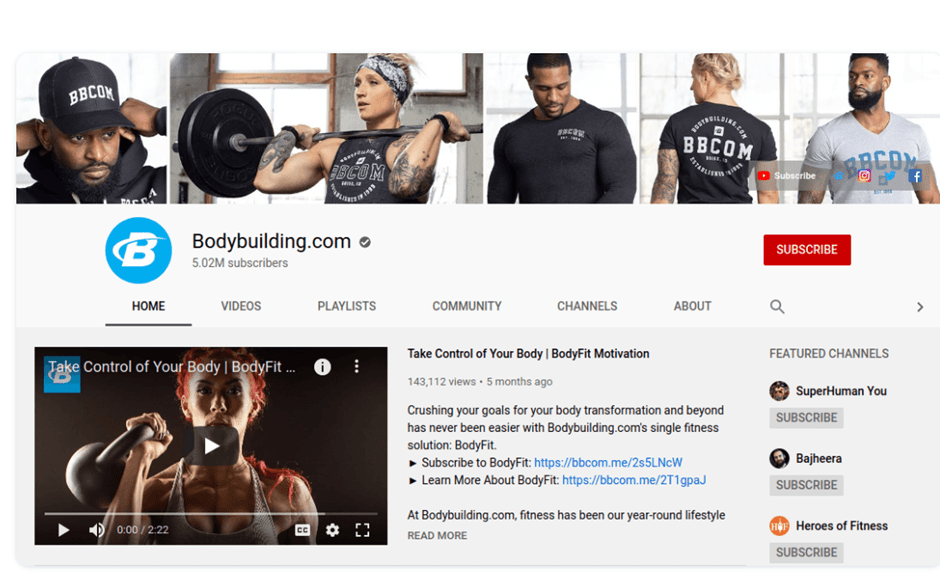
By helping subscribers achieve a personal goal or overcome a challenge, you can make them feel connected to the brand rather than giving the impression that the brand is only focused on making a profit from them.
2. Test Paid Ads with a Targeted Audience
There’s a clear reason why people enjoy watching videos from Purple. Their content is creative, visually appealing, and instantly recognizable because of the brand’s distinctive purple design. The engaging visuals and unique style make their videos memorable and often help them gain viral attention online.
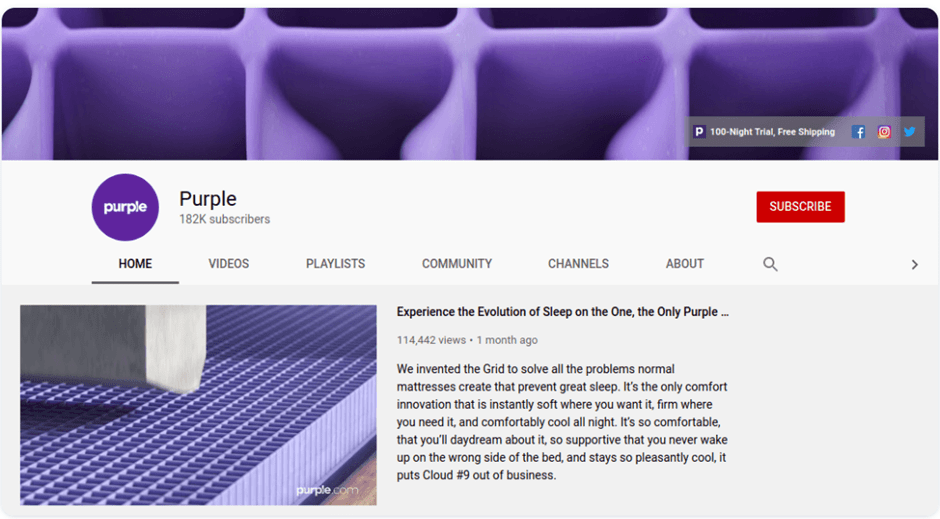
Purple uses several creative techniques to capture viewers’ attention in their advertisements. These include pattern interruption, product comparisons, benefit-focused messaging, and informative explainer videos. What makes their approach stand out is that their videos feel more polished and professional, rather than having the typical do-it-yourself style often seen on YouTube.
This strategy helps the brand connect with its audience and keeps viewers engaged with the content. As a result, people are more likely to stay focused on the video instead of scrolling through their phones or clicking away.
Conclusion
YouTube has truly moved away from being a place where people and brands produce dumb videos for an extensive search engine. Today, it is a platform where you can provide your brand with an opportunity to distribute engaging visual content.
With more resources designed to make YouTube easy to use, marketing on this platform should no longer be just a side project where you can under-serve your audience. Keep your audience engaged and entertained. And don’t forget to keep tabs on the changes involved in your strategy.